
Skate (left) and classic (right) cross-country skis differ significantly in length, profile, and base preparation. — Wikimedia Commons / CC BY-SA
Choosing cross-country ski equipment starts with one decision: classic technique or skate technique. The two disciplines use fundamentally different ski designs, and most bindings, boots, and skis are not interchangeable between them. Many Canadian skiers begin with classic equipment on groomed trails and add skate equipment later if they choose to pursue that discipline.
Classic Skis
Classic skis are longer and narrower than skate skis and are designed to follow a set track. The underfoot zone — called the kick zone or wax pocket — is treated differently from the glide zones at the tip and tail. On waxable skis, a grip wax is applied to this zone to provide traction when the ski is weighted during the kick phase. On waxless skis, a textured pattern (fish scale or similar) built into the base provides grip without applied wax.
For Canadian conditions, waxless skis are often recommended for recreational skiers dealing with variable or wet snow, as they perform reliably across a wider temperature range without requiring wax kit management on the trail. Waxable skis offer better glide and kick efficiency when the correct wax is applied, but that requires knowing the snow type and temperature at the time of skiing.
Sizing Note
Classic Ski Length
Classic skis are typically selected based on the skier's body weight rather than height. The camber stiffness — how much the ski arches under the foot — must match the skier's weight to allow the kick zone to contact the snow during the push phase while keeping it off the snow during glide. Ski shop staff can assess this using flex tests and weight tables from the manufacturer.
Skate Skis
Skate skis are shorter and stiffer than classic skis, without a kick zone. The entire base is treated as a glide surface. The skate technique involves pushing off to the side rather than straight back, requiring a groomed surface wide enough to accommodate the V-shaped stride pattern. Most groomed trail networks in Canada that cater to skate skiing maintain a centre lane of approximately four metres or wider that is left flat rather than tracked.
Skate skiing is more physically demanding than classic and requires greater cardiovascular fitness and technique to use efficiently. It is also significantly faster on groomed terrain, which attracts competitive and fitness-oriented skiers. Canadian clubs affiliated with Cross Country Canada typically offer both disciplines on their groomed networks.
Poles
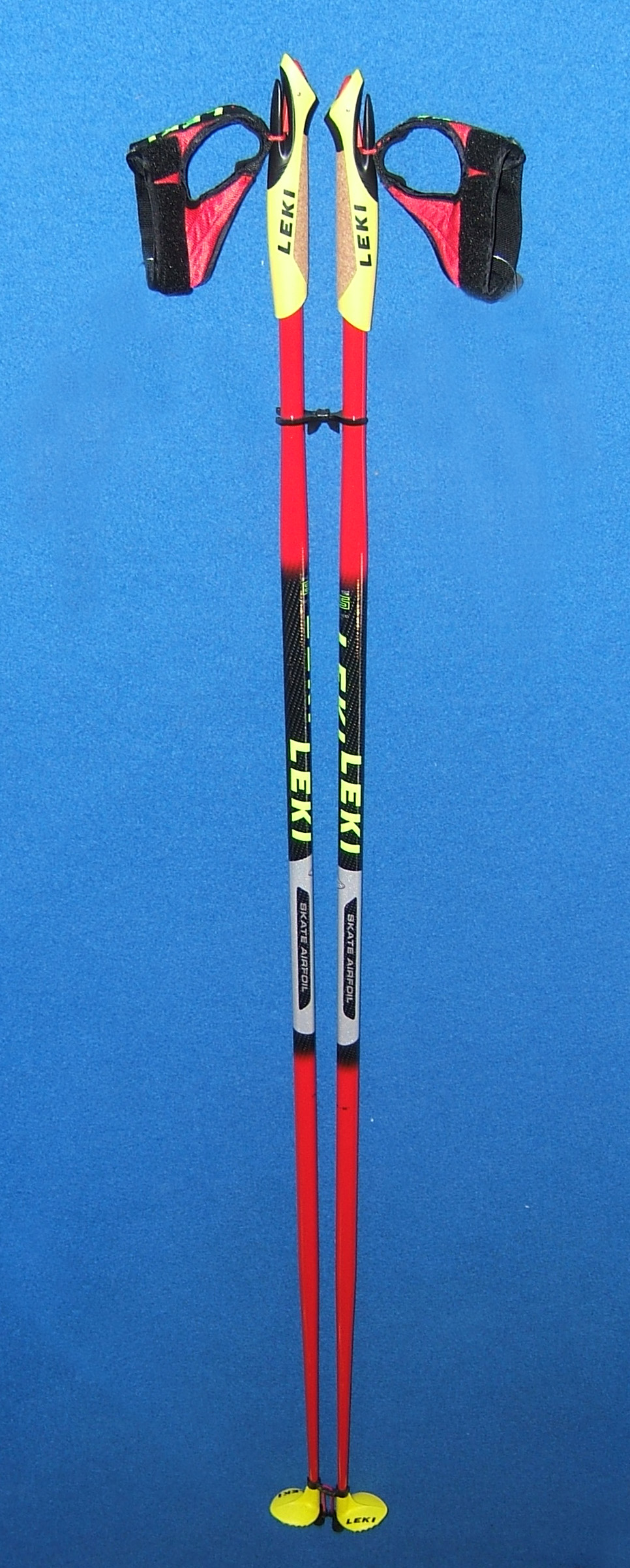
Skate technique poles are longer than classic poles relative to body height. — Wikimedia Commons / CC BY-SA
Pole length differs between techniques. Classic poles are generally sized to reach the skier's armpit, while skate poles reach to chin or nose height, reflecting the different role poles play in each discipline. Skate skiing uses a double-pole push in combination with every stride, making pole length and shaft stiffness more critical to efficiency.
Pole shafts are made from aluminium, fibreglass, or carbon fibre. Carbon poles are lighter and transfer energy more efficiently but are more expensive. For recreational skiers, fibreglass or aluminium poles at a lower price point perform adequately and withstand casual use on groomed trails without the same risk of damage from falls or leverage stress.
Boots and Bindings
Cross-country ski boots clip into bindings using one of several standard systems. The most widespread current standard on groomed-trail skis is NNN (New Nordic Norm), used by Rottefella and compatible manufacturers, and SNS (Salomon Nordic System), now largely consolidated under the Prolink name. The two systems are not compatible; boots, bindings, and skis must all be matched to the same standard.
Classic boots are softer and allow more ankle flex for the diagonal stride motion. Skate boots are stiffer and higher cut to provide lateral ankle support during the skating motion. Some boot models marketed as "combi" boots fall between the two in stiffness and can be used for casual recreational outings in both techniques, though they do not perform optimally in either.
Cold-Weather Considerations for Equipment
At temperatures below approximately -15°C, glide waxes and kick waxes behave differently and require colder-rated products. Fluorocarbon-free waxes now dominate the recreational market following competition rule changes, and most commercial wax kits sold in Canada are labelled for temperature ranges that correspond to the snow conditions those temperatures produce. Ski boots rated for cold-weather use include insulation in the upper, which matters for outings of several hours in sub-zero conditions.